
Wildfire-conscious landscaping doesn’t have to look like a firebreak. Thoughtful design can make it an attractive extension of your home.
Across Boulder County and Colorado’s Front Range, homeowners are examining how mature trees, gardens, foundation plantings, and mulch can influence wildfire risk, especially when combustible materials are close to structures.
For more than two decades, Outdoor Craftsmen has designed, built, and maintained Colorado landscapes, combining practical vegetation management with thoughtful craftsmanship.
We may remove overgrown shrubs, improve plant spacing, or replace combustible mulch near a home with decorative stone and custom gravel blends—creating attractive landscapes better prepared for wildfire conditions.
Start Now: Winter Preparation for Spring Improvements
Fall and winter are ideal times to plan wildfire-conscious landscape improvements.
When conditions allow, our crews can remove unwanted vegetation, selectively prune, clear debris, and prepare planting beds for spring.
Removing dense junipers near a home can reduce combustible vegetation and open space for decorative stone, custom gravel blends, or planting areas that complement the home’s architecture.
Some pruning and planting are better suited to other seasons. Offseason planning helps us schedule those improvements appropriately.
Before starting, explore whether financial assistance is available for qualifying work.
Financial Assistance for Wildfire Mitigation: Programs Worth Exploring
Local wildfire mitigation programs may offer assistance; eligibility, funding, and covered work vary.
Boulder County Wildfire Partners: Property assessments, educational resources, and information about available rebates. Explore Wildfire Partners.
City of Boulder WRAP: Wildfire resilience assistance for eligible properties when funding is available. Learn about WRAP.
Boulder County Mitigation Programs: Resources for property owners, HOAs, and communities. Explore programs.
Community Chipping: Information about assistance with managing woody debris from mitigation activities. Learn more.
Some programs require assessments or approval before work begins, and routine landscape maintenance may not qualify. Confirm eligibility directly with the program administrator before proceeding.
Defensible Space: What Matters Around Your Home
Defensible space is the area around a structure where vegetation and combustible materials are managed to reduce wildfire hazards.
Colorado State Forest Service guidance considers distance from the home.
The First Five Feet — The Most Critical Area
Windblown embers can ignite combustible materials near foundations, siding, and decks.
Natural stone, decorative gravel, and pavers can help in this area. Treatments should follow current guidance, applicable requirements, and a property-specific assessment.
We consider more than a strip of gravel: stone color, texture, scale, and transitions to walkways, patios, and gardens. Custom blends and decorative stone help the finished landscape feel intentional.
Five to Thirty Feet — Thoughtful Planting and Maintenance
Plant spacing, selective pruning, and dead vegetation removal can interrupt continuous fuel pathways.
The goal isn’t to eliminate every planting, but to maintain separation between plants and structures.
Thirty to One Hundred Feet and Beyond — Managing the Larger Landscape
On larger properties, thinning vegetation, managing grasses, and removing dead material may reduce wildfire hazards.
Wooded lots, slopes, and open-space edges may need site-specific recommendations.
Learn more through the Colorado State Forest Service’s defensible-space guidance.
Putting Experience to Work: The Caine Project
At the Caine estate, wildfire mitigation became part of a broader landscape project. The homeowner sought defensible space and received certification through Boulder County’s Wildfire Partners program while preserving the property’s character.
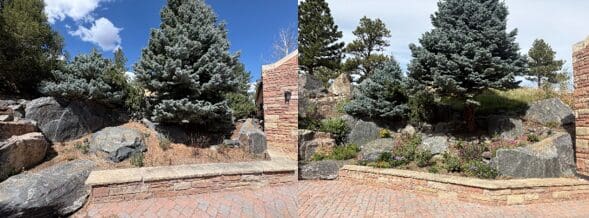
After seeing neighbors participate in Wildfire Partners, the homeowner added mitigation improvements to the original project scope.
Following a Wildfire Partners assessment, Outdoor Craftsmen removed junipers and selected shrubs, pruned lower tree branches in identified 30- and 100-foot zones, and moved shrubs away from vulnerable windows.
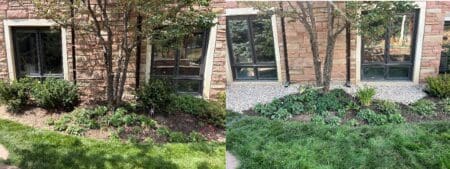
The home’s stone exterior and metal roof were considered as part of the property-specific assessment, which allowed some desirable vegetation to remain closer to the residence.
Before work began, we walked the property with the homeowner to confirm removals and pruning. Our crews then completed the work and cleaned the site.
The Caine project demonstrates how an independent wildfire assessment and thoughtful landscape work can improve defensible space while preserving an established landscape’s character.
Colorado Landscape Features Worth Reconsidering
Several familiar Front Range landscape features warrant a closer look.
Juniper Shrubs
Junipers tolerate drought, but dense growth, dead foliage, and combustible oils can pose concerns near structures. Consider removal or replacement where they create fuel hazards.
Mature Trees and Shrubs
Mature trees offer shade, beauty, and value. Appropriate pruning, deadwood removal, and attention to nearby vegetation may improve conditions without removing them.
Ornamental Grasses and Perennials
Ornamental grasses and perennials add texture and seasonal interest, but dry foliage can become fuel. Placement and seasonal cleanup matter.
Organic Mulch
Wood mulch benefits soil health and moisture retention but is combustible near structures. Decorative stone and custom gravel offer attractive alternatives in those locations.
No plant is completely fireproof. Plant selection, placement, irrigation, and ongoing maintenance all influence wildfire preparedness.
Where Landscape Design and Maintenance Come Together
Wildfire-conscious landscaping requires ongoing care.
Our design-build team can remove problematic plants, install decorative stone, redesign beds, and select suitable replacements.
Our maintenance team supports those improvements through pruning, debris removal, seasonal cleanup, and monitoring plant growth.
Together, our design-build and maintenance teams plan improvements to remain attractive and effective as the landscape matures.
Understanding Local Requirements and Professional Assessments
Wildfire mitigation requirements vary by jurisdiction, property location, and project scope.
Requirements depend on jurisdiction, location, and project scope.
• City of Boulder Wildland-Urban Interface Code
• City of Boulder Approved Tree and Plant List
An important distinction: Outdoor Craftsmen provides landscape design, installation, and maintenance services that can support wildfire mitigation goals. We do not represent these services as a formal wildfire risk assessment, certification, or guarantee of code compliance.
Outdoor Craftsmen provides landscape design, installation, and maintenance—not formal wildfire risk assessments, certification, or guarantees of code compliance.
For official assessments or certification, consult the appropriate qualified professional or administering organization. We can help implement landscape recommendations consistent with applicable requirements.
Does wildfire mitigation mean removing all my landscaping?
No. The objective is to reduce combustible materials and fuel pathways, particularly near structures. Many established landscape features can be preserved through appropriate spacing, pruning, and maintenance.
No. The goal is to reduce combustible materials and fuel pathways near structures. Appropriate spacing, pruning, and maintenance can preserve many established features.
Absolutely. Custom gravel blends, decorative stone, carefully selected plants, and thoughtfully designed hardscape can create beautiful outdoor spaces while addressing wildfire-conscious design considerations.
Yes. Decorative stone, custom gravel, selected plants, and thoughtfully designed hardscape can be beautiful while supporting wildfire-conscious design.
No. We provide landscape improvements and maintenance that can support wildfire mitigation recommendations. Formal assessments, certifications, and compliance determinations belong to the appropriate qualified professionals and authorities.
No. We provide landscape work that supports mitigation recommendations; qualified professionals and authorities handle formal assessments, certification, and compliance determinations.
A landscape should complement your home, reflect your personal style, and provide years of enjoyment. In Colorado, preparing for wildfire deserves a place in that conversation.
Your landscape should complement your home and provide years of enjoyment. In Colorado, wildfire preparedness belongs in that plan.
From foundation plantings and decorative stone to vegetation management and larger renovations, Outdoor Craftsmen can help explore solutions suited to your property.
Contact Outdoor Craftsmen, Ltd. at 303-828-0408 to discuss how our design-build and maintenance teams can help you create a landscape that’s beautiful, thoughtfully maintained, and better prepared for Colorado’s changing conditions.
________________________________________
Contact Outdoor Craftsmen, Ltd. at 303-828-0408 to discuss attractive, thoughtfully maintained landscape improvements suited to Colorado’s wildfire conditions.
This article is for general educational purposes and is not a professional wildfire risk assessment, certification, or guarantee of code compliance. No landscape or mitigation practice can make a property fireproof or guarantee protection against wildfire damage. Consult qualified wildfire mitigation professionals and local authorities for property-specific recommendations.
Outdoor Craftsmen does not administer third-party grants or rebates and cannot guarantee eligibility, approval, reimbursement, or funding. Program administrators make those determinations.


